
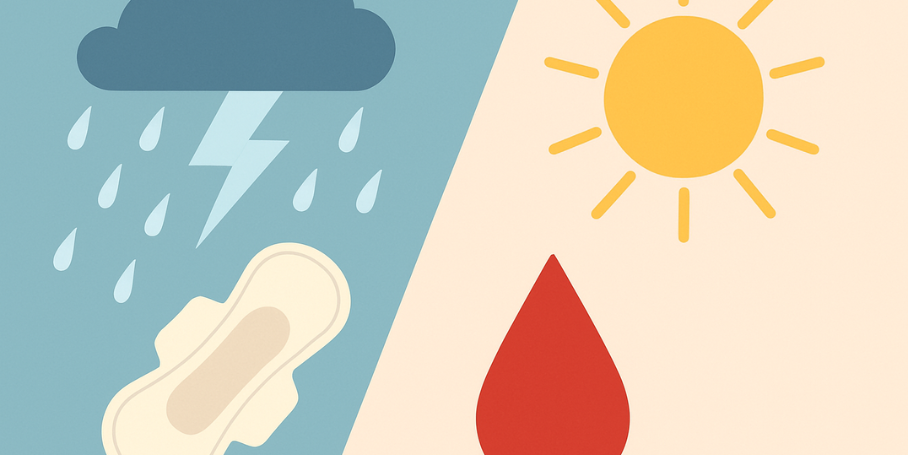
The menstrual cycle is much more sensitive than we think.
Of course, hormones, stress, and diet remain the main drivers of this biological process. But an external variable, often overlooked, deserves our full attention: the weather . What we call the "environment"—heat, humidity, light, pressure changes—acts as an indirect regulator of the cycle. Have you noticed that your periods are heavier in the summer? That your cramps intensify in the winter? This is not a coincidence.
Natural light: the primary seasonal influence
Sunlight plays an important role in our biological rhythms. It influences the secretion of melatonin, which is itself linked to sex hormones such as FSH (follicle-stimulating hormone) and LH (luteinizing hormone). In summer, when the days are long and bright, some people experience a shorter or more regular cycle. Conversely, in winter, the decrease in natural light can disrupt ovulation and lengthen the cycle.
To counteract this phenomenon, daily exposure to daylight, even in winter, is essential. You can also use light therapy lamps, which help regulate the sleep-wake cycle and, consequently, the hormonal cycle.
Warmth and abundant flow: a common duo
Heat has a vasodilatory effect: it dilates blood vessels. This can lead to heavier menstrual flow , especially in hot, humid conditions. In summer, the uterus is also more vascularized, which can increase bleeding. Furthermore, perspiration, discomfort from tight clothing, and general fatigue can worsen unpleasant sensations.
It's the season for adapting your period protection. Thin, breathable period panties are ideal for summer. Opt for models designed for heavy flow but ultra-lightweight , to avoid feeling damp while staying well protected. Discover our selection of lightweight and breathable heavy flow panties.
Cold weather: an intensifier of cramps
In winter, low temperatures cause vasoconstriction , meaning a narrowing of the blood vessels. As a result, uterine cramps can become more painful. The cold also increases muscle stiffness and limits mobility, sometimes making menstrual pain more difficult to bear.
A simple solution? Opt for high-waisted, supportive period panties and keep a gentle heat source (hot water bottle, heating belt) on your lower abdomen. Our cozy styles are perfect for the colder months. Discover them in our collection of high-waisted period panties.
Humidity and the risk of fungal infections or irritations
In autumn or spring, the ambient humidity can contribute to minor gynecological discomforts such as chafing, itching, and even yeast infections. This is especially true if you wear synthetic or non-breathable sanitary products. Ambient humidity weakens the vulva's natural barrier.
To avoid these inconveniences, opt for well-fitting organic cotton period underwear and change your protection every 6 to 8 hours , even if your flow is light. Also, remember to carry a spare pair in a waterproof pouch so you can stay dry and secure wherever you are.
And what about atmospheric pressure in all of this?
This phenomenon is less studied, but some women report experiencing intensified menstrual pain during sudden changes in weather, particularly on rainy or stormy days. This could be linked to pressure variations that affect the nervous system and sensitive tissues of the uterus.
There is still no irrefutable scientific proof, but there are many anecdotal evidence. And as always, listening to your body is the best guide .
Stay hydrated in all weather
Hydration is often overlooked during menstruation, yet it plays a crucial role. In summer, it's essential to replenish the water lost through perspiration. In winter, heating dries out the air, further reducing body hydration. Dehydration can worsen headaches, cramps, and fatigue associated with menstruation.
Drink plenty of water, but also remineralizing or soothing herbal teas (chamomile, nettle, raspberry). Eat fruits rich in water (melon, watermelon, cucumber in summer – oranges, apples in winter).
Summary table: Adapting your cycle to the seasons
| Season | Possible effects | Advice |
|---|---|---|
| Summer | Heavier flow, fatigue, sweating | Hydration, thin panties, refreshing break |
| Autumn | PMS, humidity, irritations | Breathable models, essential oils |
| Winter | Severe cramps, declining morale | Warmth, gentle yoga, comfort |
| Spring | Increased energy, hormonal instability | Moderate exercise, listening to your body, stabilizing your cycle |
Adapt your protective gear according to the weather
Changing your period underwear according to the season is an excellent idea for added comfort:
-
Summer : lightweight, breathable cotton panties.
-
Winter : high-waisted, soft, wrap-around panties.
-
Humidity : waterproof pouches, frequent changes.
Find all our models in the complete collection of menstrual panties .
Observe the sky, but above all, your body
The menstrual cycle isn't isolated from the outside world. It reacts to what you eat, what you feel… but also to your surroundings. The weather is one of those subtle yet powerful elements that influence our menstrual experiences. Heat, cold, light, humidity… by learning to anticipate these effects, you can better manage each phase of your cycle. And make period underwear your best allies, in every season.